
Game On! 2026: Play, Power, Provocation, and the Future of Gameful Learning
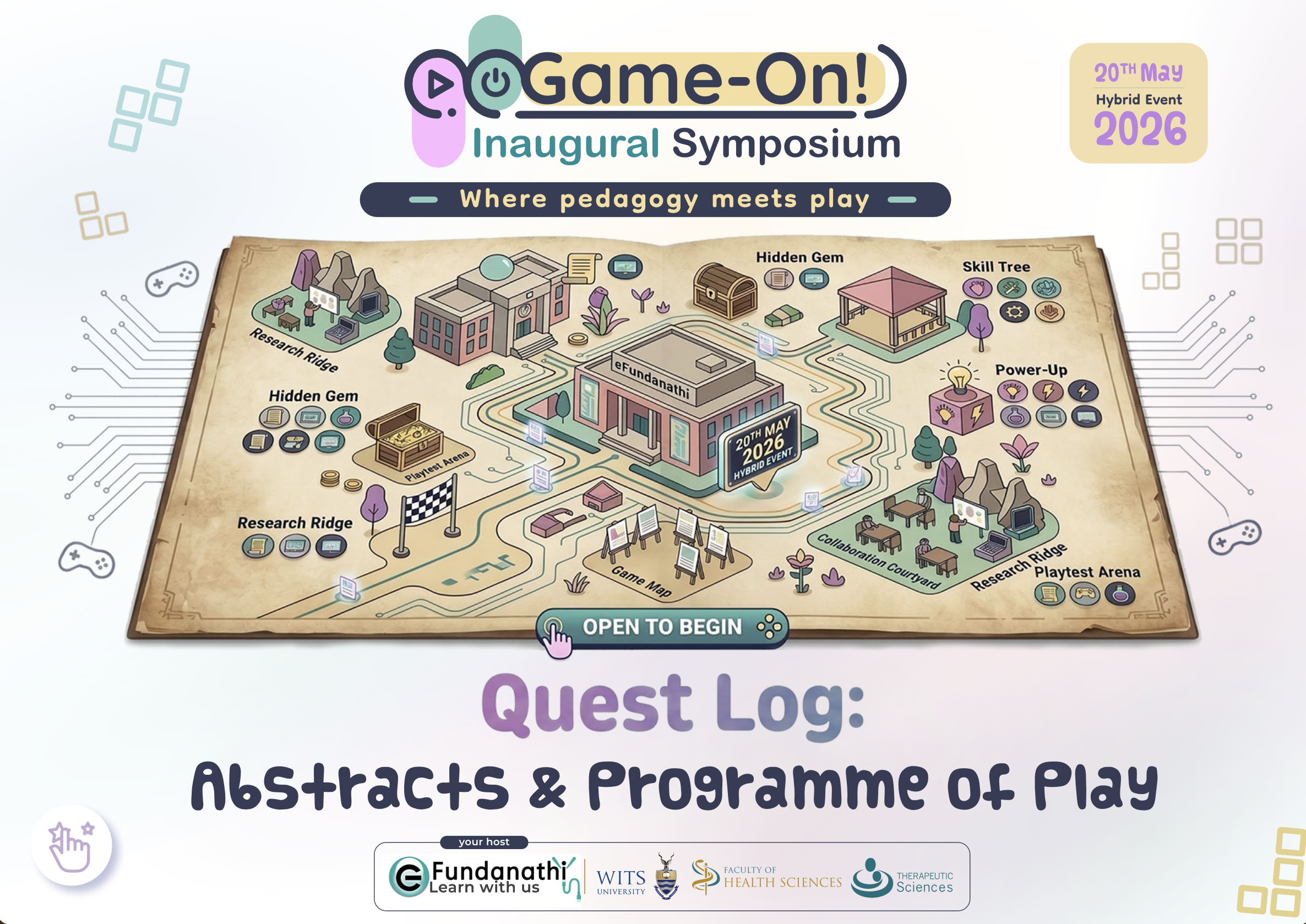
On 20 May 2026, I had the privilege of participating in the inaugural Game On! Symposium hosted at University of the Witwatersrand. What immediately struck me was how different the atmosphere felt from the average academic gathering. The event rejected much of the stiffness and ceremonial performance that often dominates higher education conferences. Instead, the symposium leaned into playfulness, experimentation, conversation, and genuine curiosity.
The organisers framed the entire event through the language of games. Sessions became “quests,” workshops became “skill tree unlocks,” and breaks became “power-ups” and “loot drops.” On paper this could easily have collapsed into superficial gimmickry. In practice, however, it created something human. People spoke more openly. Panels felt less guarded. Conversations spilled naturally into hallways, workshops, and lunch tables. The event possessed a kind of intellectual looseness that academia often forgets it needs.
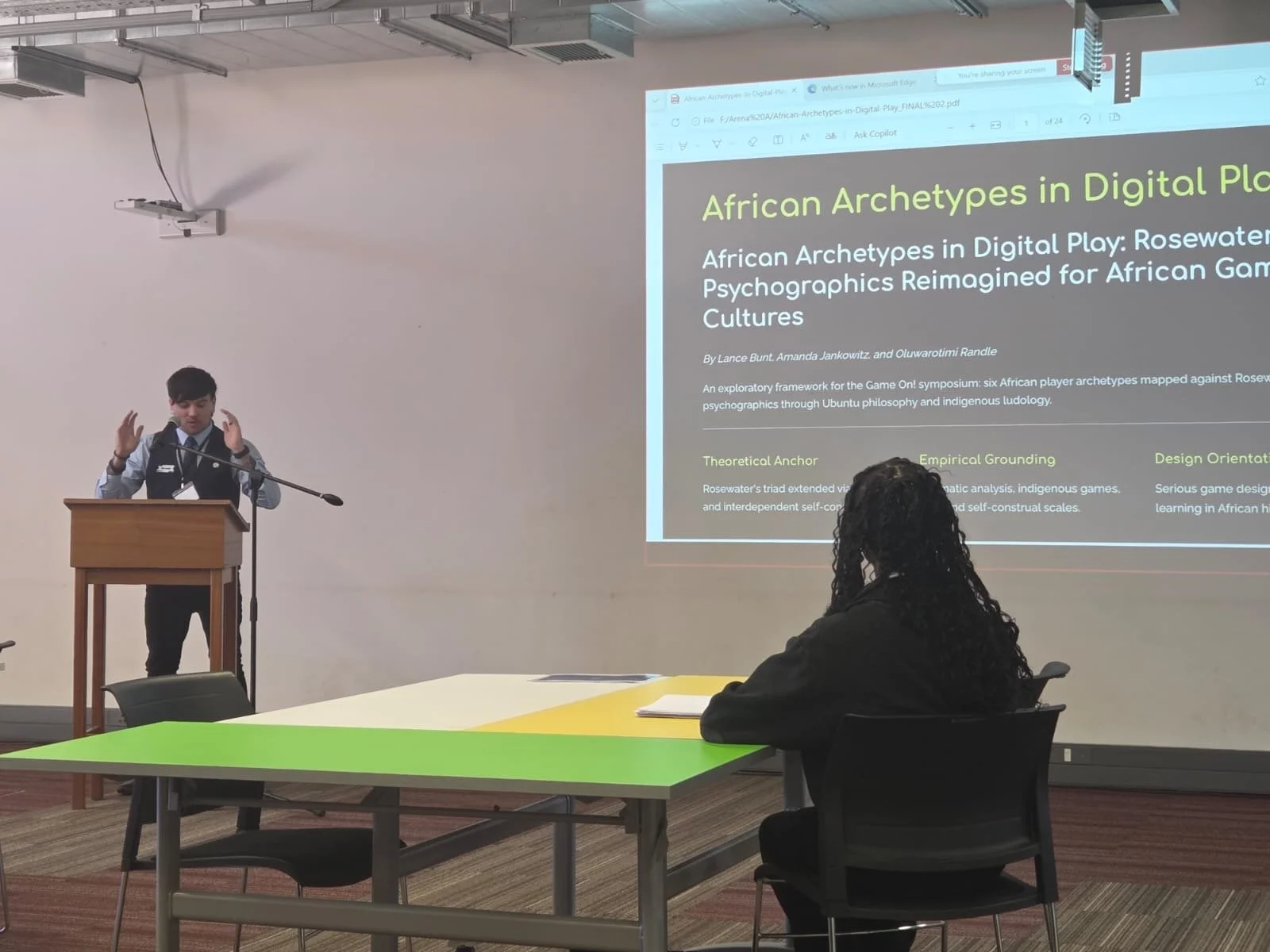
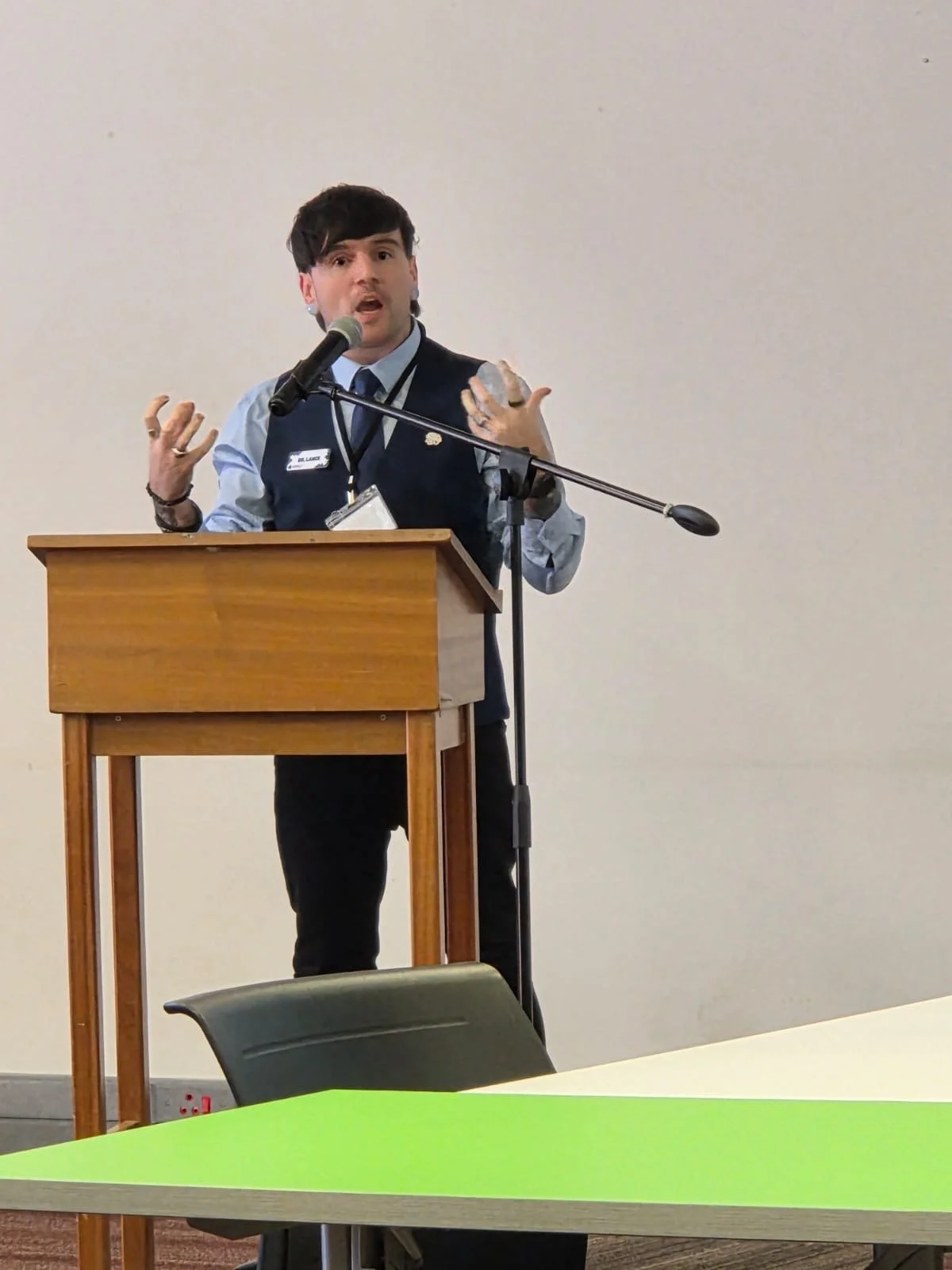
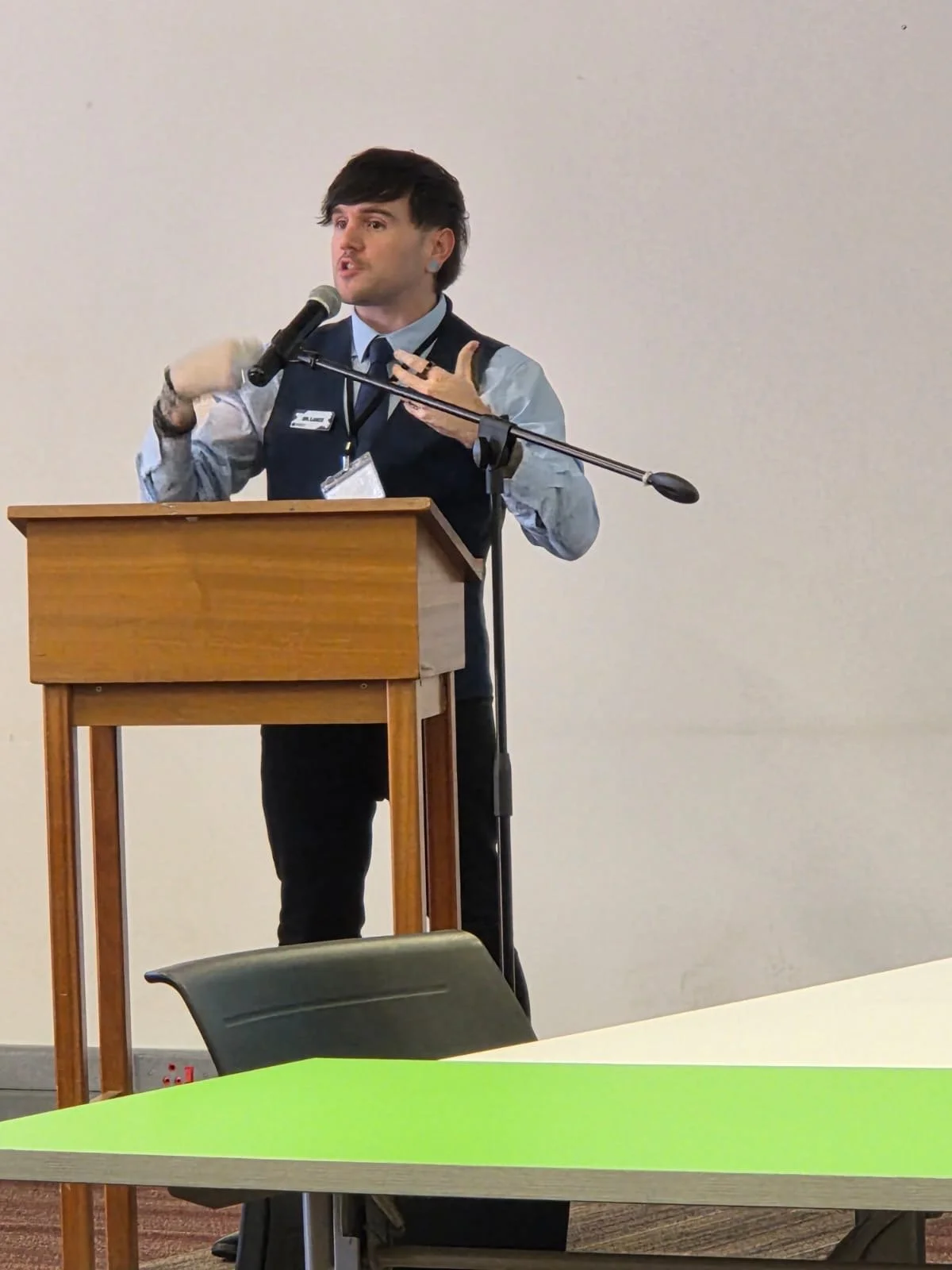
I presented our exploratory work on African player archetypes within digital play, developed alongside Amanda Jankowitz and Olu Randle. The presentation examined how dominant psychographic models in games, many of which emerged from highly Western and individualised design traditions, may struggle to account for relational identity, communal obligation, stewardship, spiritual continuity, and harmony-oriented motivations.
One of the central provocations of the talk was simple: perhaps the theoretical centre of game studies cannot remain permanently anchored to exported Western assumptions about play, motivation, and identity. The framework remains exploratory and intentionally provisional, but the audience engagement around the six archetypes was deeply encouraging. Discussions around the Griot, the Healer, the Trickster, and the Custodian generated exactly the kind of critical reflection I had hoped for. The room seemed willing to entertain the possibility that play itself may be culturally organised in ways that mainstream frameworks still insufficiently capture.
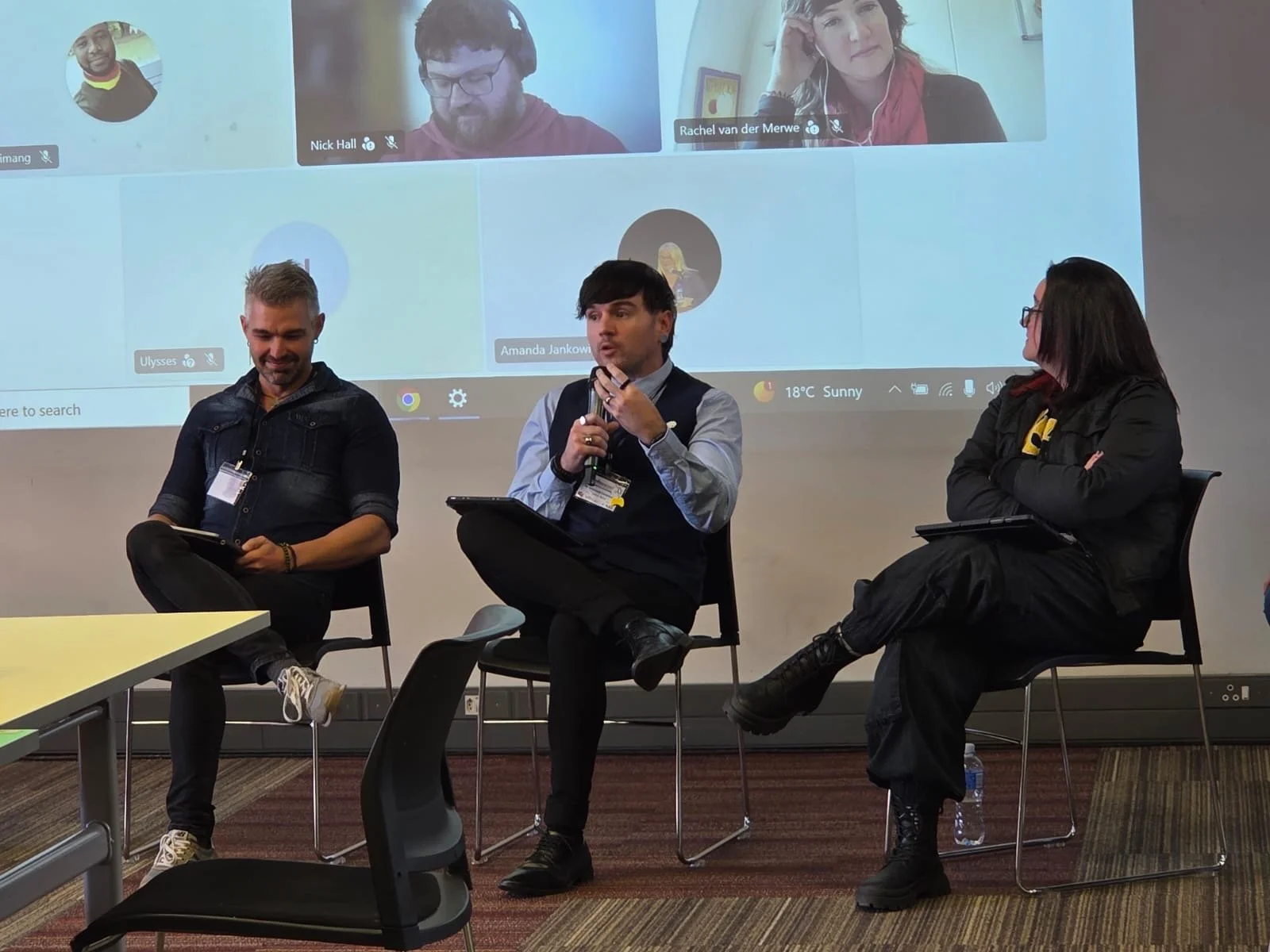
Beyond the paper itself, I also participated in the DiGRA South Africa plenary panel titled Play, Power, & Possibility: Building the Future of Game-Based Learning. As communication officer for the South African chapter, I used the opportunity to raise a growing concern I have regarding conceptual fuzziness in gameful learning discourse. Increasingly, terms such as gamification, game-based learning, serious games, educational games, immersive learning, simulations, and playful learning are collapsed into one another as if they are interchangeable. They are not.
That distinction matters because these systems operate according to fundamentally different design logics and pedagogical assumptions. A leaderboard attached to a passive worksheet is not equivalent to a simulation-based learning environment. A VR headset does not automatically produce meaningful pedagogy. Presence is not mastery.
One of the arguments I pushed strongly during the panel was that higher education frequently mistakes activity for learning, and compliance for engagement. We often add points, badges, and streaks onto fundamentally unchanged systems and then wonder why students remain disengaged. Good gameful learning is not decoration. It is systems design. It is about feedback loops, experimentation, interpretation, judgement, consequence, and reflection.
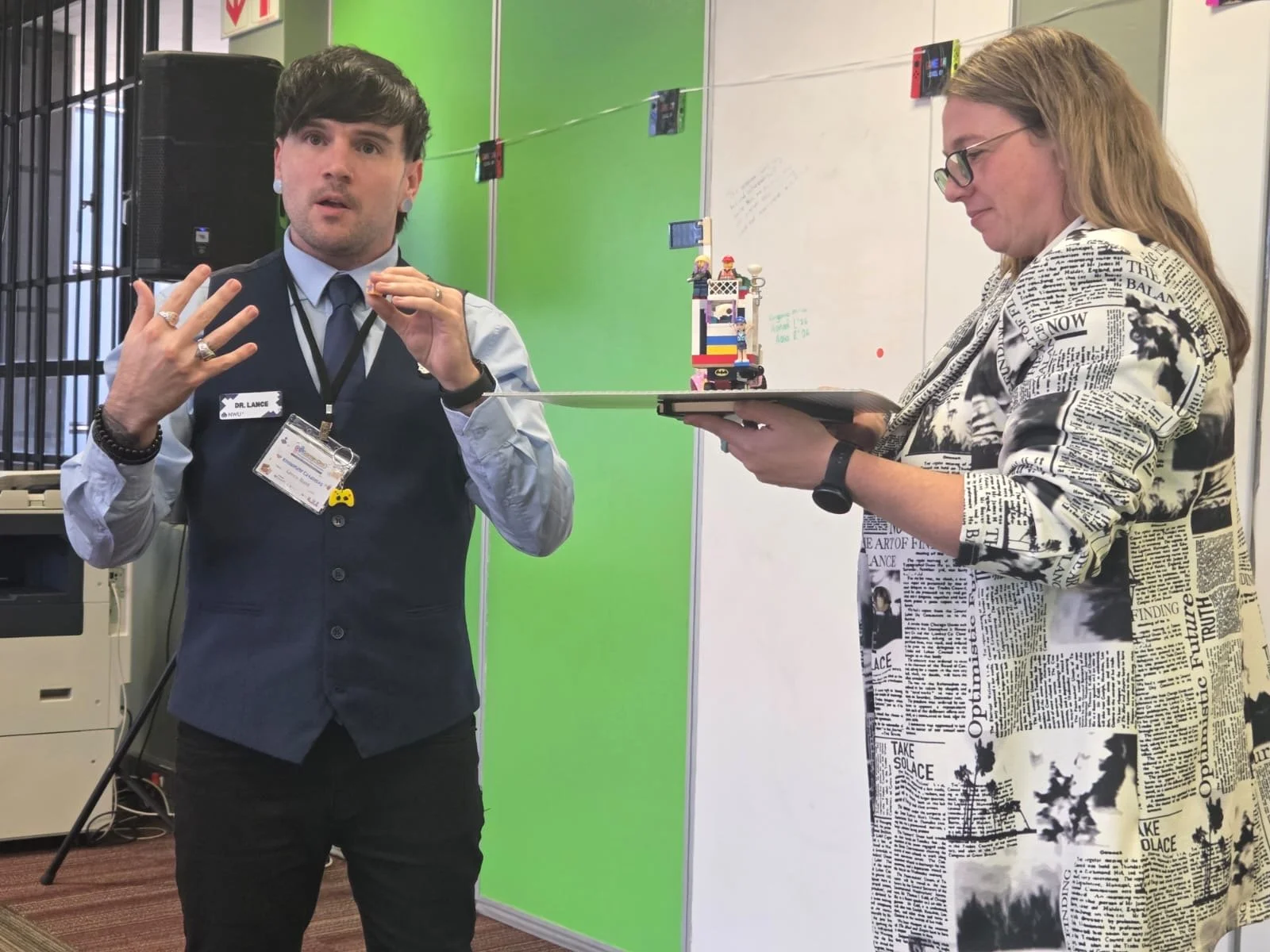
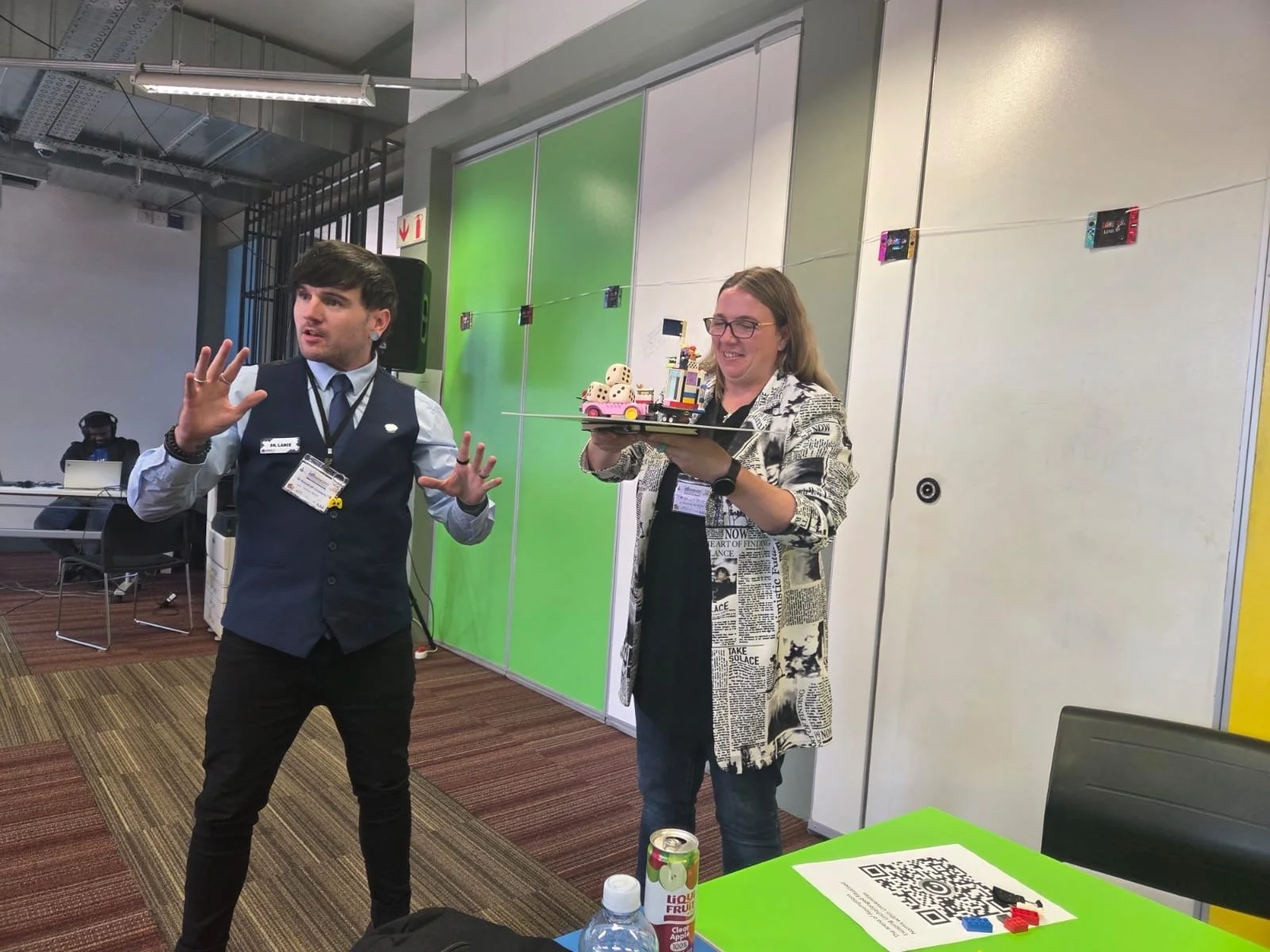
The symposium also succeeded because it embraced embodiment and participation instead of treating delegates as passive spectators. The LEGO Serious Play workshop was a perfect example. Somewhere between systems thinking, absurdity, and competitive chaos, our group managed to construct the tallest LEGO tower of the session. Credit must be given where it is due: the faceless shark minifigure clearly carried the structural integrity of the entire enterprise.
That moment captured the broader spirit of the day remarkably well. People laughed. People experimented. People challenged one another without hostility. The event felt intellectually rigorous without becoming sterile. For a symposium centred on play, that balance mattered.
The inaugural Game On! Symposium demonstrated that there is substantial appetite within South African higher education for more serious engagement with games, simulation, systems thinking, and playful pedagogies. Not as novelty. Not as superficial entertainment. But as legitimate mechanisms for thinking about learning, capability formation, ethics, identity, and social systems.
I left Wits feeling energised, challenged, and hopeful about where this space might go next.
I will absolutely be back in 2027. Preferably with an even taller LEGO tower.